
Imagine if you ran out of firewood in the middle of a freezing winter, so you started chopping up your living room furniture to keep the fire burning.
It sounds desperate, right?
Unfortunately, this is exactly what happens inside your body when you enter a state called Catabolism.
We often think muscle loss is just a cosmetic issue. However, biologically speaking, it is a survival mechanism gone wrong. When your blood lacks the necessary nutrients, your body doesn’t just wait; instead, it starts “eating” its own muscle tissue to extract the amino acids it needs to keep your heart beating and your brain functioning.
Are you burning your furniture to keep the house warm? Here are the 5 scientific signs that your body is cannibalizing itself.
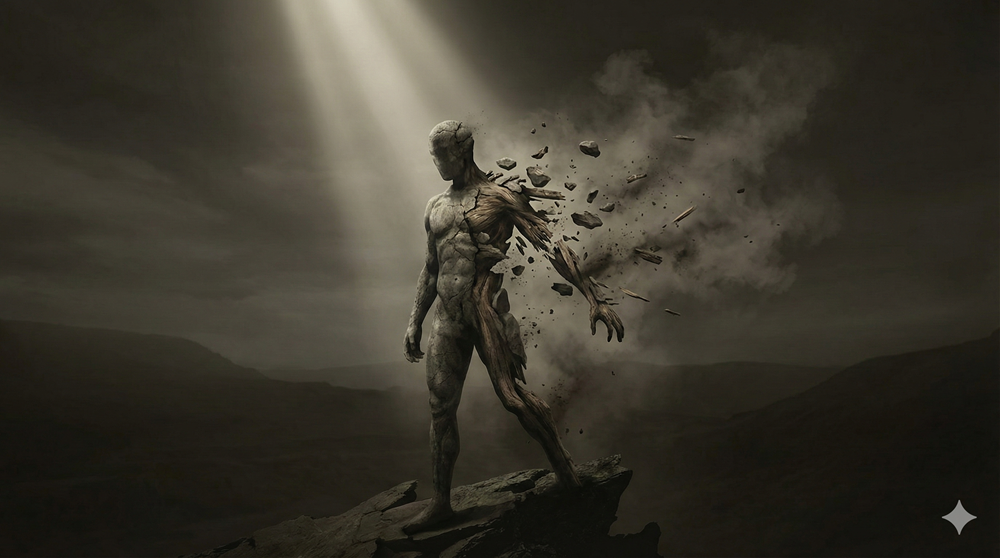
The Catabolism: Why Does The Body Eat Muscle?
Before we look at the symptoms, you must understand the “Why.”
Your heart, brain, and immune system require a constant stream of amino acids to function. They are the priority organs. Your biceps and quadriceps? To your body, they are “expendable” storage tanks.
Specifically, if you have low protein absorption (as we discussed in our previous article) or poor nutrition, your blood amino acid levels drop.
Consequently, your brain triggers a hormonal alarm. It releases cortisol, which breaks down your muscle fibers to release amino acids back into the bloodstream. In short, your body destroys your strength today to ensure you survive until tomorrow.
Sign #1: Unexplained Afternoon Fatigue (The “2 PM Crash”)
Do you feel a sudden wave of exhaustion hit you in the mid-afternoon?
This isn’t just because you skipped coffee. In fact, muscle is your metabolic engine. It holds glycogen (energy) reserves. When your body is in a catabolic state, it is actively stripping away these energy reserves.
Therefore, you don’t just feel “sleepy”; you feel physically drained, as if your battery has suddenly dropped from 100% to 10%.

Sign #2: Wounds That Take Forever to Heal
Did you scratch your arm gardening a week ago, and it’s still red and unhealed?
Healing requires raw materials—specifically, proteins to rebuild skin and tissue. However, if your body is already stealing protein from your muscles just to maintain vital organs, it certainly won’t spare any for a “minor” scratch.
According to research from the NIH, delayed wound healing is one of the earliest clinical signs of protein-energy malnutrition.
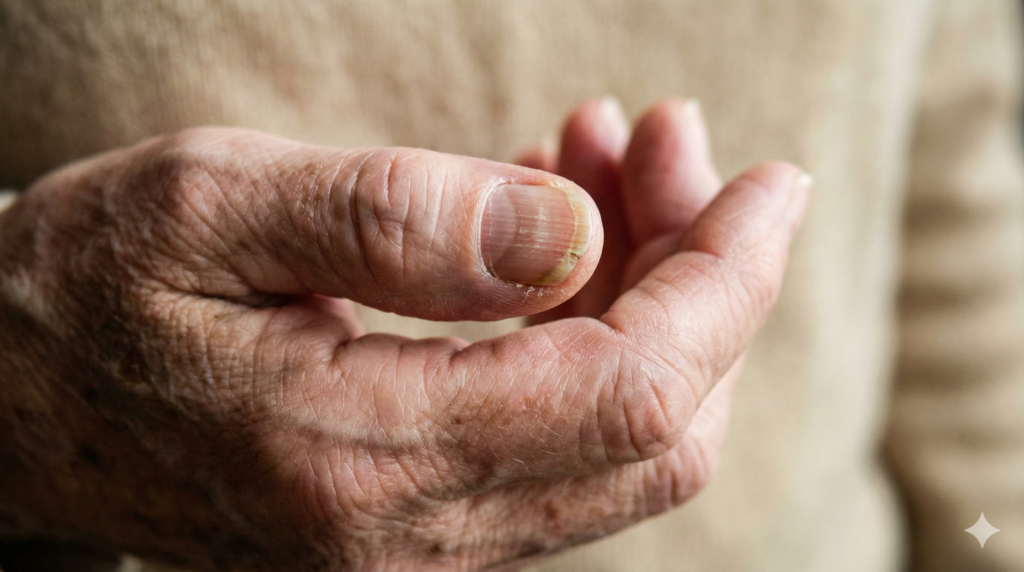
Sign #3: Brittle Nails and Thinning Hair
Your body is a smart economist. When resources are scarce, it cuts funding to “non-essential” departments first.
Hair and nails are made almost entirely of a protein called Keratin. Consequently, when you are in a catabolic state, your body stops sending high-quality nutrients to these areas.
As a result, you might notice:
- Nails that chip or peel easily.
- Hair accumulating in your shower drain.
- Dry, flaky skin that lotion doesn’t seem to fix.
Sign #4: Getting Sick More Often
Antibodies—the soldiers of your immune system—are essentially proteins.
Furthermore, the amino acid Glutamine, stored primarily in your muscles, is the main fuel source for your immune cells. When you lose muscle, you lose your immune system’s fuel tank.
Therefore, if you find yourself catching every cold or flu that goes around, it might not be “bad luck.” It could be a sign that your muscle reserves are too depleted to support a strong defense.
Sign #5: You Are Losing Weight, But Getting “Softer”
This is the most deceptive sign. You step on the scale and see the number going down. You think: “Great! I’m losing weight.”
However, look in the mirror. Do you look toned, or do you look “soft” and sagging?
In a catabolic state, your body often holds onto fat (for emergency energy) while burning muscle. This leads to a condition called “Sarcopenic Obesity”—where you are technically lighter, but your body fat percentage is skyrocketing because your muscle mass is vanishing.

Stop the Destruction
If you recognize these signs, don’t panic—but do take action. Catabolism is reversible.
The key is to signal your body that there is an abundance of resources so it stops burning the furniture. This requires a two-pronged approach: sending the right “build” signals through <a href=”/category/exercises-for-seniors”><strong>resistance exercise</strong></a> and flooding your system with rapidly absorbing amino acids.
In our next guide, we will reveal the specific “Muscle-Sparring” nutrients that can flip the switch from Catabolism (breaking down) back to Anabolism (building up).
Take the Grip Test: Remember the “Grip Strength” we talked about in our Sarcopenia article? If your grip is weak AND you have these symptoms, your body is likely in a catabolic state right now.