
What is Sarcopenia? The Silent “Muscle Eater”
Derived from the Greek words sarx (flesh) and penia (poverty), Sarcopenia literally means “poverty of the flesh.”
Unlike osteoporosis (which affects bones), Sarcopenia attacks your lean muscle mass. It is not merely the result of being lazy; it is a degenerative loss of skeletal muscle mass, quality, and strength.
For decades, doctors treated muscle loss as an inevitable side effect of gray hair. However, modern research now classifies Sarcopenia as a serious health condition that can drastically reduce your “Healthspan”—the number of years you live in good health, not just alive.
Have you noticed that opening a fresh jar of pickles requires more effort than it used to? For instance, perhaps carrying groceries up a single flight of stairs leaves your legs feeling surprisingly heavy?
Initially, most of us dismiss these signs with a sigh, thinking: “Well, I’m just getting older.”
However, science tells a different story. This isn’t just “aging.” In fact, it is a biological condition where your muscle cells are essentially entering a self-destruct mode. In the medical world, this silent thief has a name: Sarcopenia
Furthermore, the most dangerous part is that it starts much earlier than you think.
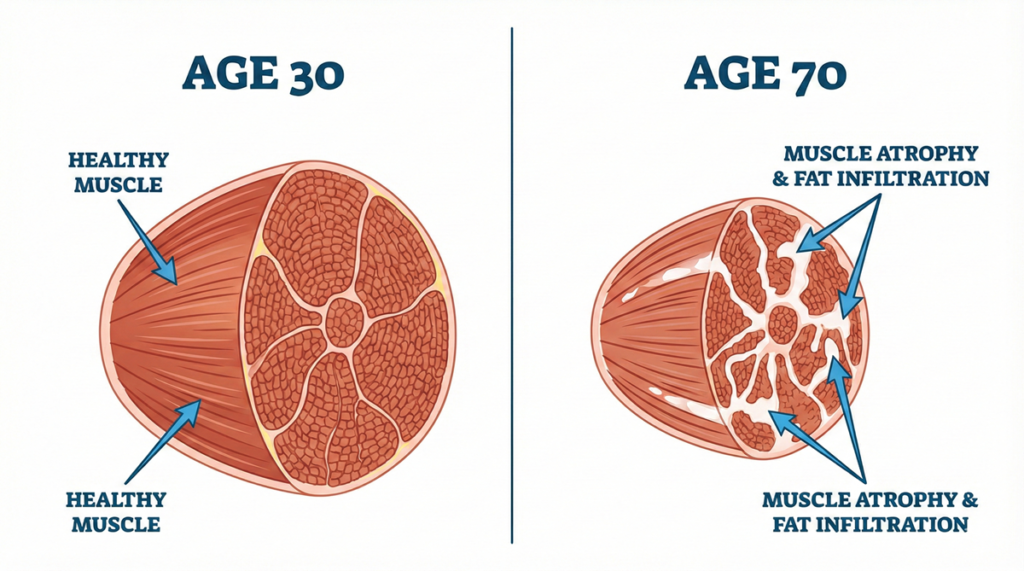
The Dangerous Mathematics: Losing 1% Per Year
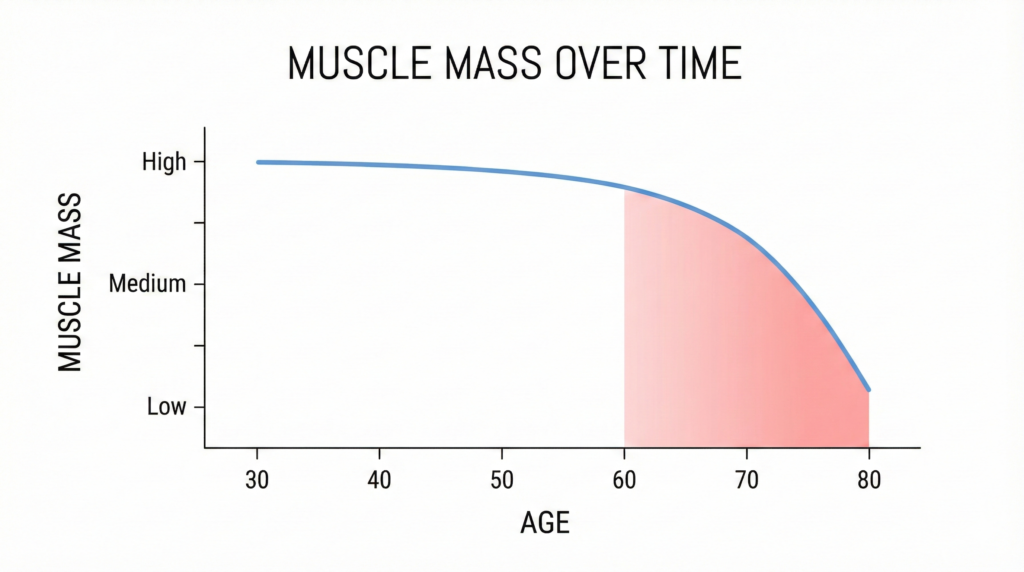
Here is the statistic that should wake you up: Starting as early as age 30 to 40, you begin to lose 3% to 5% of your muscle mass per decade.
By the time you hit age 60, this process accelerates. Without active intervention, the average person can lose 1% of their muscle mass every single year.
Do the math. By age 70, you could have lost nearly 30% to 40% of the muscle you had in your prime. This doesn’t just mean you look less toned. Muscle is your metabolic engine. Less muscle means:
- Slower metabolism (leading to stubborn “age-related” weight gain).
- Less protection for your joints (leading to knee and back pain).
- Reduced balance (drastically increasing the risk of fatal falls).
The “Grip Strength” Connection: A Window into Your Heart
You might wonder: “I’m not a bodybuilder, why do I care about muscle size?”
The reason is simple: your muscles communicate with your heart. Indeed, one of the most surprising findings in longevity science is the correlation between Grip Strength and cardiovascular health.
For example, a landmark study published in The Lancet found that grip strength was a better predictor of death from heart disease than systolic blood pressure. Why is this the case? Because a weak grip is a biomarker for overall accelerated aging. Basically, if your extremities are weak, it is highly likely that your heart—the most important muscle of all—is also struggling.
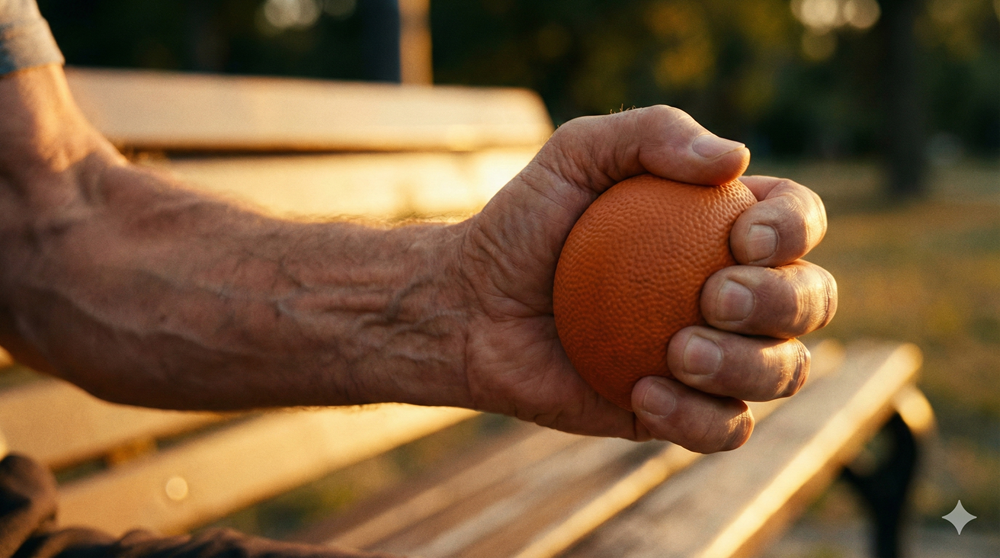
Therefore, take a moment to self-check. If you cannot squeeze a stress ball firmly or hold heavy bags without trembling, your body is waving a red flag.
It’s Not Laziness, It’s “Anabolic Resistance”
Why does this happen? Is it just because we move less?
Partially, yes. But the deeper cause is cellular. As we age, our bodies develop Anabolic Resistance.
When a 20-year-old eats a steak or an egg, their body efficiently converts that protein into new muscle tissue. But when a 60-year-old eats the exact same meal, their body resists the signal to build muscle. It’s like shouting at someone who is hard of hearing; the message just doesn’t get through.
Your muscle cells aren’t just tired; they are starving for the right fuel and the right stimulation.
The Good News: It Is Reversible
Sarcopenia is common, but it is not inevitable.
Although you cannot stop the clock, you can rewrite your biology. Specifically, the solution lies in overcoming Anabolic Resistance through two non-negotiable pillars: specific exercises for seniors and “high-efficiency” nutrition that bypasses your body’s aging filters.
In our next article, we will debunk the “Protein Paradox” and explain why eating more meat might not be enough to save your muscles—and what you should do instead.