
You have probably heard the advice a thousand times: “If you want to stay strong, eat more protein.”
So, you dutifully eat your eggs at breakfast, chicken at lunch, and perhaps a steak at dinner. Yet, despite all this effort, you still feel your strength fading.. Your legs feel shaky, and your energy levels are flat.
Why is this happening?
This is what scientists call the “Protein Paradox.” Specifically, the problem isn’t what you are putting into your mouth; rather, the problem lies deep inside your stomach.
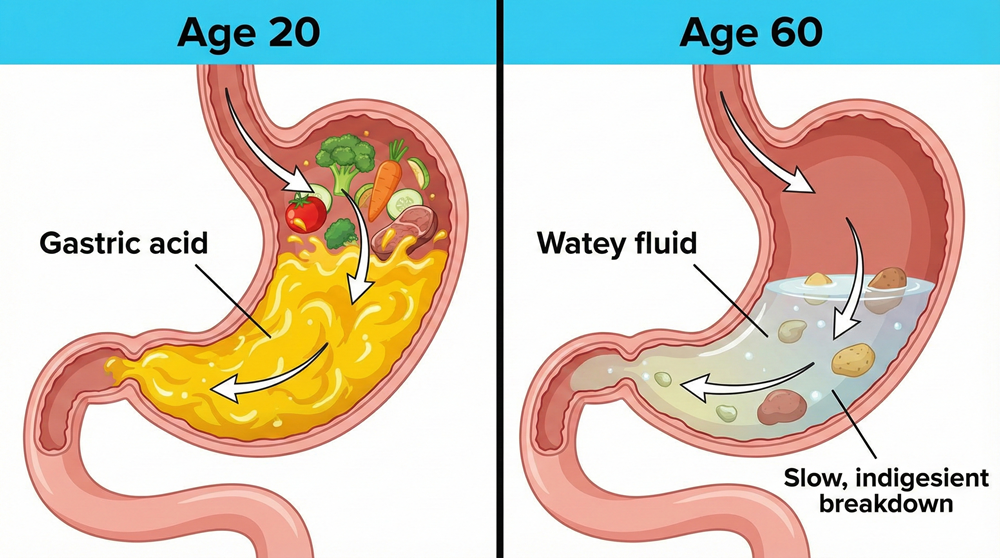
The Gatekeeper: Why Your Stomach Acid Matters
Protein is complex. Imagine a piece of steak as a tightly knotted rope. Before your body can use that rope to build muscle, it must untie every single knot.
The tool your body uses to untie these knots is Hydrochloric Acid (HCl).
However, as we age, our physiology changes. Studies show that up to 40% of people over age 60 suffer from low stomach acid (Hypochlorhydria).
Consequently, when you eat a piece of meat, your stomach no longer has the “firepower” to break it down completely. Instead of becoming fuel for your muscles, that expensive protein often passes through your system largely undigested. In other words, you aren’t truly “eating” what you swallow.
The Absorption Math: Age 20 vs. Age 60
Let’s look at the numbers, because they are startling.
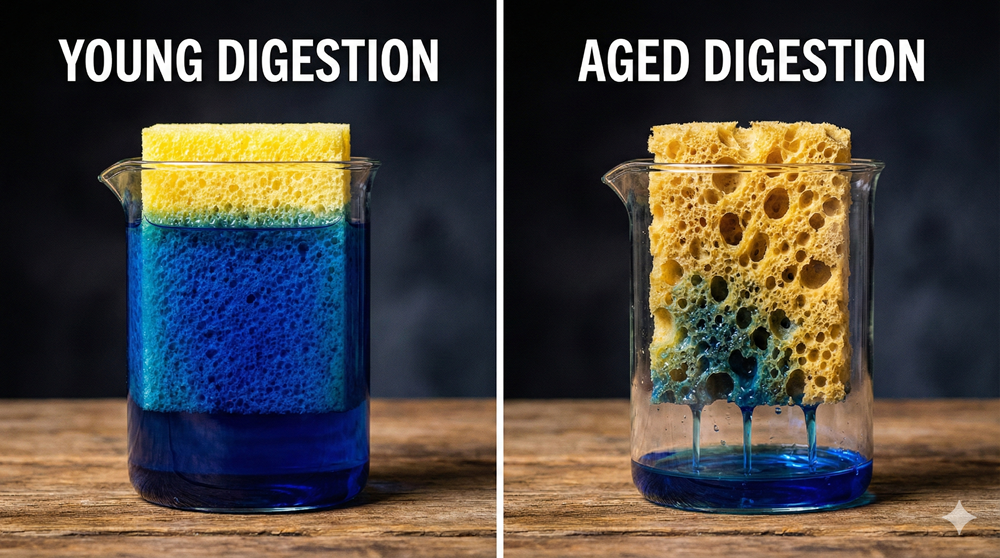
- At age 20: Your digestive system is a high-efficiency machine. You might absorb 90% to 95% of the amino acids from a chicken breast.
- At age 60+: Due to “Anabolic Resistance” and low stomach acid, your absorption rate can plummet to 20% or 30%.
Therefore, to get the same muscle-building effect that you got from one steak in your 20s, you might need to eat three or four steaks today.
Obviously, that is physically impossible for most seniors. Trying to force-feed yourself massive amounts of food not only causes bloating and indigestion but also leads to a much more serious problem: Nitrogen Waste.
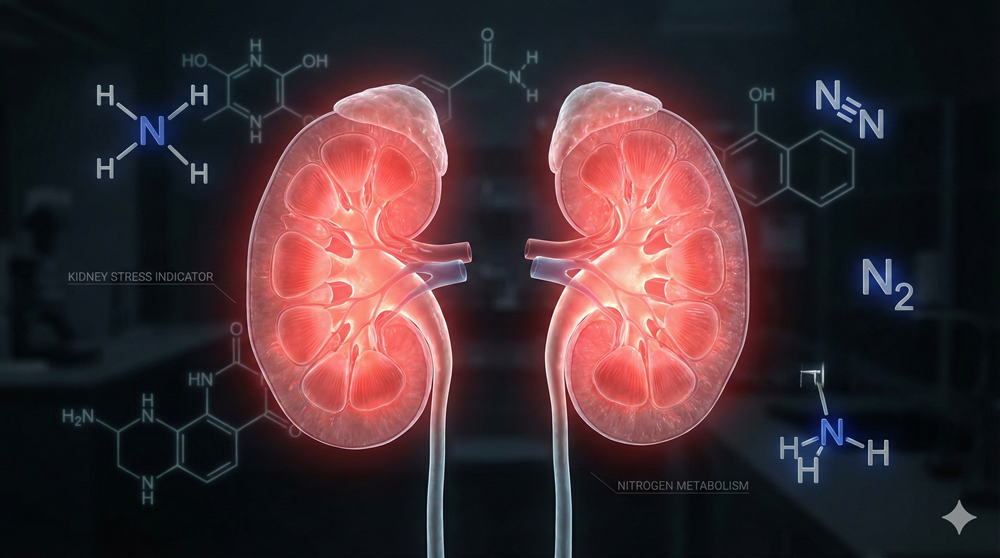
The Hidden Danger: Nitrogen Waste and Your Kidneys
What happens to the 70% of protein that you don’t absorb? It doesn’t just magically disappear.
When protein is not properly broken down and utilized, it creates metabolic byproducts, primarily Nitrogen. Your body treats this as toxic waste.
Consequently, your kidneys have to work overtime to filter this waste out of your blood and excrete it as urea.
For a senior with aging kidneys, this is a heavy burden. In fact, overloading your system with hard-to-digest animal protein can lead to:
- Chronic Fatigue: Your body uses up energy trying to detoxify itself.
- Brain Fog: Elevated ammonia levels can affect cognitive function.
- Kidney Stress: Accelerating the decline of renal function.
Thus, simply “eating more meat” is not the solution. It is often the cause of further exhaustion.
So, What Is The Solution?
Does this mean you should stop eating protein? Absolutely not.
Protein is essential for survival. However, the strategy must change. Instead of focusing on quantity (how much you eat), you must focus on quality and bio-availability (how much you absorb).
You need protein sources that are “pre-digested” or optimized for absorption—forms that don’t require high stomach acid to break down and don’t create toxic nitrogen waste.
In our next article, we will compare traditional Whey Protein against Free-Form Amino Acids to see which one is the true “Gold Standard” for the aging body.
Digestive Tip: Do you feel heavy after a meat-heavy meal? Try taking a sip of water with a teaspoon of apple cider vinegar before eating. It may help stimulate the acid your stomach needs.